Prostate Health Myths vs Facts: What Is True
Quick Answer: Are the Common Prostate Health Myths True?
Most common prostate health myths do not hold up, and the real picture is reassuring. An enlarged prostate does not turn into cancer, coffee and an active sex life do not cause prostate disease, and symptoms are common but not inevitable. Sensible daily habits are a better focus than fear.
- Myth busted: an enlarged prostate is not a form of, or a step toward, cancer.
- Reassuring: urinary symptoms are common with age but often mild and manageable.
- Realistic: supplements may support comfort, but they do not cure or shrink the gland.
Few parts of the body attract as much folklore as the prostate. It is small, it sits somewhere most men would rather not think about, and it becomes a topic mainly through worried conversations and forwarded articles. The result is a tangle of half-truths: that an enlarged prostate is the first stage of cancer, that coffee or an active sex life is quietly damaging it, that trouble is simply the price of getting older, and that the right pill will make the whole problem disappear. None of those hold up well against the actual research.
Clearing them up matters, because myths tend to push men in two unhelpful directions at once — needless panic on one side, and false reassurance from "miracle" products on the other. Below are the myths that come up most often, each paired with what the evidence genuinely supports. The aim is not to alarm you or to sell you certainty, but to give you an honest, calmer map of the territory.
Myth 1: "An enlarged prostate turns into cancer"
This is the big one, and it is worth dismantling first because it causes the most fear. Benign prostatic hyperplasia — BPH, the medical name for a non-cancerous enlarged prostate — is not cancer, is not a precursor to cancer, and does not become cancer over time. The two conditions even start in different regions of the gland. BPH typically develops in the central zone that surrounds the urethra, which is exactly why it produces urinary symptoms, while most prostate cancers arise in the outer peripheral zone.
Major urology bodies, including the American Urological Association, are explicit that having BPH does not increase your risk of prostate cancer. The confusion is understandable: both become more common with age, both are checked for during the same appointment, and both can nudge a PSA reading upward. So a man can have both at once — but that is coincidence and shared demographics, not one disease morphing into another. The practical takeaway is not to panic if you are told your prostate is enlarged, while still keeping up with the check-ups that would catch anything unrelated.
Myth 2: "Coffee, spicy food and sex cause prostate cancer"
A long list of everyday pleasures gets blamed for prostate trouble, and most of the accusations do not survive scrutiny. Take coffee: rather than being a culprit, several large observational studies have found that regular coffee drinking is associated with either no change or a slightly lower risk of aggressive prostate cancer. Coffee and other caffeinated or alcoholic drinks can irritate the bladder and make urinary urgency feel worse in the short term, which is a genuine comfort issue — but irritating the bladder is a world away from causing disease.
Sex draws the most anxious myths of all, and here the evidence actually leans reassuring. Several large cohort studies, including long-running follow-ups of tens of thousands of men, have linked more frequent ejaculation with a modestly lower risk of prostate cancer. That is an association drawn from observational data, not proof of cause, so it should not be oversold. But it firmly contradicts the folk belief that an active sex life wears the prostate out. Spicy food, likewise, has no credible link to prostate cancer; at most it may aggravate urinary symptoms in some sensitive individuals.
Myth 3: "Prostate symptoms are inevitable, so there is nothing to do"
It is true that the prostate tends to grow with age and that urinary symptoms become more common as the decades pass — getting up at night, a weaker stream, a sense of not fully emptying. But "more common" is not the same as "inevitable" or "untreatable," and the fatalistic version of this belief stops men from getting easy help.
Plenty of men reach their seventies with only mild symptoms, and how the bladder behaves is influenced by things within reach: body weight, physical activity, how much fluid you take in during the evening, and how much caffeine and alcohol you drink. Simple habit changes — front-loading fluids earlier in the day, trimming late-evening drinks, staying active — often take the edge off nagging symptoms. And when symptoms are genuinely bothersome, there is a well-established ladder of medical options, from prescription medicines to minor procedures. Treating symptoms as an unchangeable life sentence means quietly tolerating something that frequently responds to attention.
Myth 4: "The right supplement will cure or shrink an enlarged prostate"
This is the myth we are most careful about, precisely because we operate in the supplement world. No dietary supplement cures prostate disease, and none has been shown to reliably shrink an enlarged prostate. Any product promising to do so is overreaching, and the marketing language of "flush," "reset" or "melt away" is a red flag rather than a selling point.
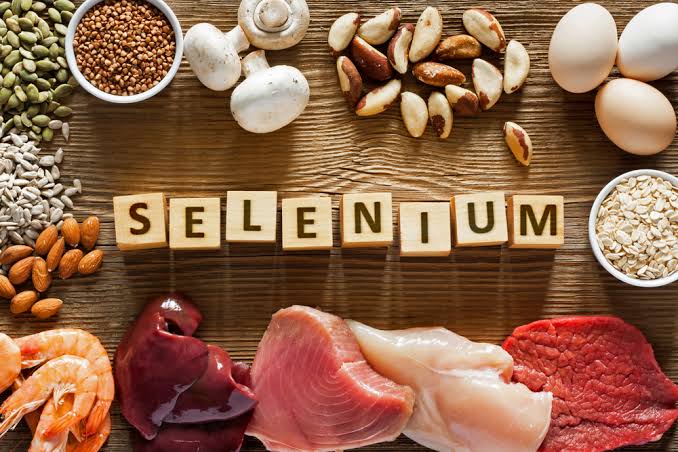
What is fair to say is narrower and more honest. Some plant-derived ingredients have human trial data for urinary symptoms rather than for the size of the gland or for disease. Beta-sitosterol, for example, has systematic-review support for improving urinary flow and symptom scores in men with benign lower-urinary-tract symptoms — a functional benefit, not a structural cure. Saw palmetto is the household name but its evidence is genuinely mixed, with the largest and best-controlled trials finding it no better than placebo. Minerals get mythologised too: selenium was widely promoted for prostate protection until the large SELECT trial found it did not prevent prostate cancer, and in one arm it was linked to a small increase in risk.
So the accurate framing for a supplement is "may support everyday urinary comfort for some men, gradually, alongside sensible habits" — never "cure," "treat" or "shrink." A finished multi-ingredient product is also not the same as any single studied dose, so it is always worth checking a label's milligram amounts against what the trials actually used.
A few more myths worth clearing up
| The myth | What the evidence says |
|---|---|
| A high PSA means you have cancer | PSA can rise from BPH, infection, recent cycling or even ejaculation; a raised number means "investigate," not "diagnosed" |
| No symptoms means the prostate is fine | Early prostate cancer often causes no symptoms at all, which is why screening decisions are made with a clinician rather than by how you feel |
| Only older men need to think about it | Risk rises with age, but family history and ethnicity can bring the conversation forward to the forties |
| Cycling causes prostate cancer | Cycling can temporarily raise PSA and cause saddle discomfort, but it is not an established cause of prostate cancer |
| Testosterone therapy always endangers the prostate | The relationship is more nuanced than once believed and is a decision to make with a doctor, not a blanket rule |
Where the evidence stops
Two honest limits are worth stating plainly. First, debunking myths is not the same as offering personal reassurance about your own body — only a clinician who can examine you and see your results can do that. Second, the reassuring findings above are largely drawn from observational studies, which show patterns rather than prove cause and effect. They are strong enough to retire old scare stories, but not strong enough to promise anyone a particular outcome. If you have difficulty urinating, blood in the urine, pelvic pain or a PSA result that concerns you, that is a medical situation, and the right next step is a conversation with a healthcare professional, not a search for the perfect supplement.
Medical note: this article is general information, not medical advice. It is not intended to diagnose, treat, cure or prevent any condition. Speak to a healthcare professional about your own prostate health and before starting any supplement, especially if you take medication.
Scientific references
- American Urological Association — Benign Prostatic Hyperplasia (BPH) Guideline
- National Cancer Institute — Prostate-Specific Antigen (PSA) Test
- Rider J.R. et al. — Ejaculation Frequency and Risk of Prostate Cancer, European Urology
- Lippman S.M. et al. — Effect of Selenium and Vitamin E on Prostate Cancer (SELECT), JAMA
- NIH NCCIH — Saw Palmetto: What You Need To Know
See how ProstaVitalis approaches prostate support
Saw palmetto, beta-sitosterol, pygeum and nettle plus zinc and selenium in one daily formula — presented honestly, with every ingredient and its evidence laid out and no cure claims.
Order Now