Prostate Supplement Timeline: When to Expect Results
How Long Do Prostate Supplements Take to Work?
Most people should think in weeks to months, not days. Studied botanicals are tested over 4 to 12 weeks, and urinary symptom scores improve gradually. A fair personal trial is 8 to 12 weeks at the label dose, judged against a symptom score such as the IPSS rather than a feeling.
- Timescale: think weeks to months, not days.
- Placebo is real: BPH trials show large placebo improvements.
- Measure it: use the IPSS, not a vague sense of feeling better.

Why the honest answer is "weeks, not days"
The most common mistake with prostate supplements is expecting them to behave like a painkiller: take it, feel it, done. The plant compounds most often studied for urinary symptoms, such as beta-sitosterol, saw palmetto, pumpkin seed oil and pygeum, do not work that way. Their effects, where they exist, are functional and gradual. They are thought to nudge inflammation, smooth-muscle tone and how the bladder empties over time, not to switch a symptom off overnight. So the single most useful thing you can do before starting one is to reset your timeline. If you judge a supplement after three days, you are measuring noise.
What the trial durations actually tell you
A good clue to how fast something works is how long researchers ran their studies. For prostate botanicals, the answer is consistent: most randomised trials run for roughly 4 to 12 weeks, and many of the better ones use 12 weeks as the primary end point. That design choice is a signal. Researchers chose those windows because meaningful changes in urinary symptom scores take that long to appear and stabilise. Shorter studies tend to be too brief to separate a real effect from ordinary week-to-week variation.
Translated into a personal rule, that means your own trial should last at least 8 to 12 weeks of consistent daily use before you decide anything. It also means claims of dramatic relief in "days" contradict the way the evidence was actually generated. That is a useful marketing filter: if a product promises overnight results, it is not describing the science of these ingredients.
The placebo problem, explained plainly
Here is the part that trips up honest people. Benign prostatic hyperplasia (BPH) trials are famous for large placebo responses. In many studies, men taking a dummy pill report symptom improvements of around 30 to 40 percent. That is not because placebo shrinks anything. It is a stack of ordinary effects. Urinary symptoms naturally fluctuate, so a man who starts a supplement during a bad spell tends to improve simply because he was going to regress toward his average anyway. On top of that, being monitored, keeping a diary, and expecting help all genuinely improve reported scores.
This has two consequences worth sitting with. First, it explains why testimonials and your own uncontrolled experience are unreliable: some of any improvement you feel would have happened without the pill. Second, it raises the bar for evidence, which is why a supplement only earns credit when it beats placebo in a controlled trial, not just when users report feeling better. It also means that if you do improve on a supplement, part of that benefit is real to you even if part is placebo, which is fine, as long as you are honest about what you are paying for.
A realistic expectation timeline
| Time on supplement | What to realistically expect |
|---|---|
| Days 1–7 | Usually nothing attributable to the supplement; do not judge yet |
| Weeks 2–4 | Too early for firm conclusions; keep tracking your score |
| Weeks 4–8 | Any genuine effect on symptoms may start to show |
| Weeks 8–12 | The fair decision point; compare IPSS to your baseline |
| Beyond 12 weeks | If no meaningful change, reassess with a clinician rather than continue on hope |
Define "improvement" before you start
"Do you feel better?" is a weak question, because expectation and memory bias the answer. A stronger one is: has your symptom score dropped by an amount men actually notice? Urologists use the International Prostate Symptom Score (IPSS), and a fall of around three points is widely treated as the smallest clinically meaningful difference, the least change a typical man perceives as real. Write down your IPSS before you start. Repeat it at the end of your trial. If the number has not moved by roughly that amount, a warm feeling that "maybe it is a bit better" is probably not a reliable signal.
Set a review date and a stop rule in advance
Decide the rules while you are still objective. Pick a review date, 8 to 12 weeks out, and a clear stop rule: if my IPSS and daily experience have not meaningfully improved by then, I stop. Setting this in advance protects you from the two failure modes. One is quitting at day 10 before anything could have worked. The other, more expensive, is drifting on for a year "just in case", quietly re-ordering, because stopping feels like admitting it did nothing. A supplement that is not helping after a fair trial is costing you money and, worse, may be delaying a conversation about options that would help more.
What a fair trial actually looks like
To give any supplement its best honest shot, three things have to be true. Take it consistently, every day, because intermittent use never matches the trial conditions. Take it at the dose the label and the studies used, since under-dosing guarantees a null result. And track it objectively with the IPSS and, ideally, a short symptom diary, so your decision rests on data rather than mood. Do those three things and, whichever way it goes, you will get a clean answer instead of a shrug.
Why multi-ingredient formulas complicate the timeline
Most products on the shelf are not single ingredients; they are blends of saw palmetto, beta-sitosterol, pumpkin seed, nettle, zinc and more. That matters for your timeline in two ways. First, the finished blend has almost never been trialled as a whole, so the "4 to 12 weeks" window comes from studies of individual ingredients, often at doses higher than a crowded blend can fit. A formula that includes a studied ingredient at a fraction of its trial dose may simply be too weak to do what the research describes, no matter how long you wait. Always check the label's milligram amounts against the doses used in the studies.
Second, blends make it impossible to know which ingredient, if any, is responsible for a change you notice. That is fine if your only goal is symptom relief and the product delivers it, but it means you cannot draw broader conclusions such as "saw palmetto works for me". Keep your expectations tied to the outcome you can measure, your IPSS over a defined window, rather than to any theory about mechanism. The timeline and the measurement matter far more than the ingredient list's length.
When to bring in a clinician
A supplement trial is not a reason to postpone medical care. If your symptoms are moderate to severe, getting worse, or accompanied by pain, blood in the urine, retention or a raised PSA, that is a clinician's territory, not a self-experiment. Proven options, from behavioural changes to prescription medicines, exist for a reason. The most sensible framing is that a supplement is a low-stakes, time-boxed experiment layered on top of good habits, run with a clear measure and a clear end date, and never a replacement for a proper assessment.
Medical note: this article is general information, not medical advice, and supplements do not diagnose, treat, cure or prevent any disease. Talk to a healthcare professional before starting one, especially if you take other medication, and do not delay assessment of worsening urinary symptoms.
Scientific references
- Tacklind J. et al. — Serenoa repens for benign prostatic hyperplasia, Cochrane Database of Systematic Reviews
- Bent S. et al. — Saw palmetto for benign prostatic hyperplasia (CAMUS), New England Journal of Medicine
- PubMed — Placebo response in benign prostatic hyperplasia clinical trials
- Urology Care Foundation — International Prostate Symptom Score (IPSS)
- American Urological Association — Benign Prostatic Hyperplasia (BPH) Guideline
Related reading
- Saw Palmetto 320mg: Dosage and How Long It Takes to Work
- Prostate Supplement Ingredients: What to Look For
- Pumpkin Seed Oil and the Prostate: What the IPSS Trials Show
- Alpha-Blockers vs Supplements for BPH: A Comparison
Planning a fair 12-week trial?
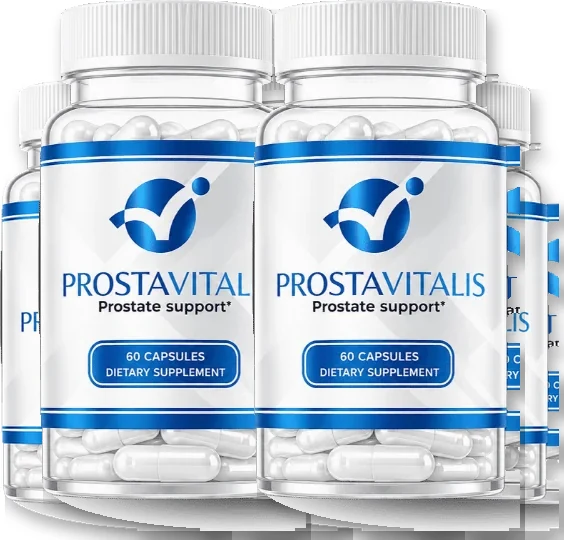
If you want a formula to run your 8-to-12-week experiment on, ProstaVitalis combines saw palmetto and beta-sitosterol with zinc and selenium, and the multi-bottle options match a full trial. See current availability.
Order Now