Pumpkin Seed Oil for Prostate: 12-Month Trial Results
Quick Answer: Does Pumpkin Seed Oil Help With BPH Symptoms?
Pumpkin seed oil for the prostate was studied in a 12-month double-blind randomised trial in Nutrition Research. Men with benign prostatic hyperplasia who took it had lower IPSS urinary symptom scores and better quality of life than those on placebo. The improvement built slowly over the year, and it is a single promising result.
- Finding: reduced IPSS scores and improved quality of life over 12 months.
- Nutrient basis: the seeds supply zinc, magnesium and cucurbitin.
- Caveat: one trial, gradual effect, not a cure — replication needed.
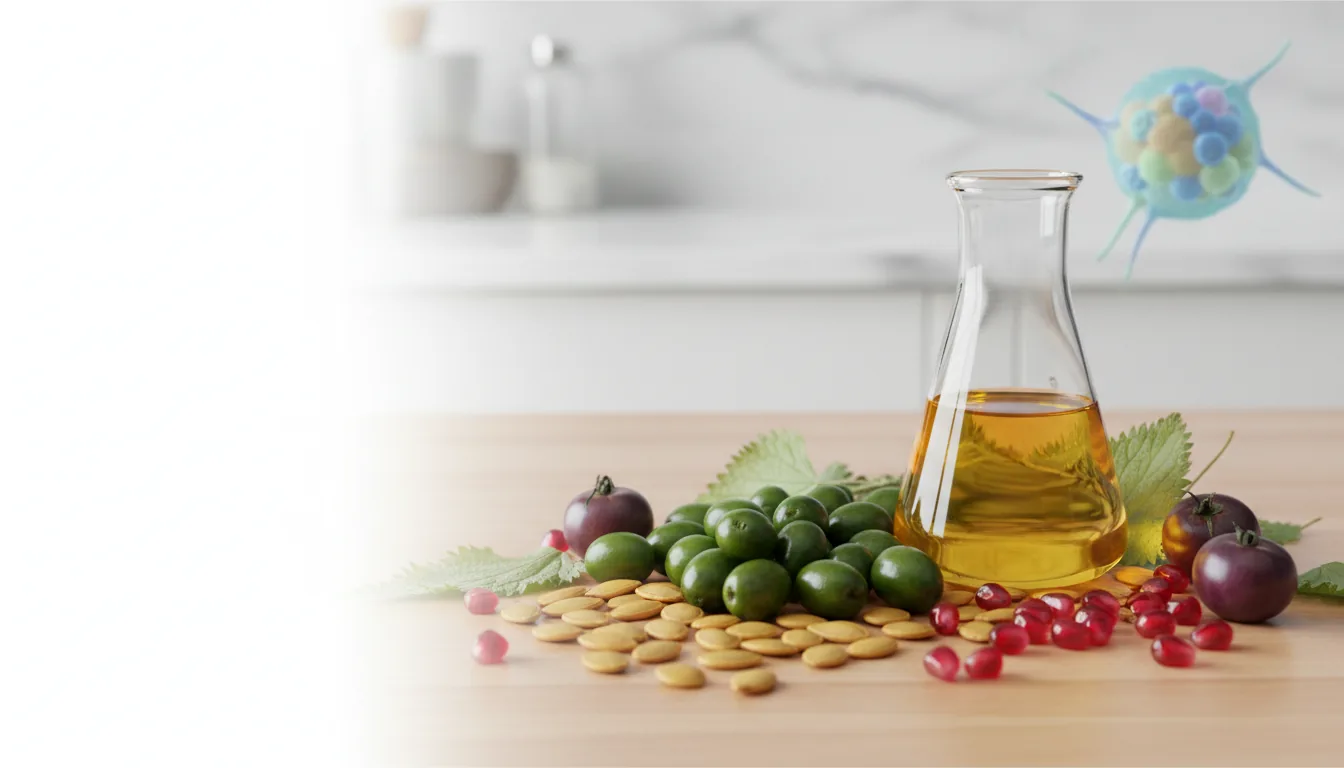
Why this particular study is worth reading
Most of what gets said about pumpkin seed oil and the prostate is folklore dressed up as fact. The interesting exception is a double-blind, placebo-controlled randomised trial published in the journal Nutrition Research, which followed men with benign prostatic hyperplasia (BPH) for a full 12 months. Three features make it stand out from the usual supplement chatter: it was randomised, so men were sorted into groups by chance rather than choice; it was double-blind, so neither the participants nor the researchers knew who was getting the real oil; and it ran for a year, long enough to judge a slow, chronic condition.
Over that period, the group taking pumpkin seed oil showed a larger drop in their International Prostate Symptom Score (IPSS) than the placebo group, along with reported improvements in quality of life. In a field where so many claims rest on a two-week anecdote, a year-long controlled comparison is genuinely useful data. It is also, importantly, still just one trial.
What the IPSS actually measures
To read the result properly you need to understand the yardstick. The IPSS is a validated questionnaire that has become the standard way researchers and urologists measure urinary symptoms. It asks seven questions about the things men with an enlarging prostate notice: a weak or interrupted stream, straining, incomplete emptying, needing to go again soon after, urgency, frequency, and how many times they wake at night. Each answer scores from 0 to 5, so the total runs from 0 to 35.
Higher is worse. Broadly, 0–7 is considered mild, 8–19 moderate, and 20–35 severe. An eighth question rates how the man feels about living with those symptoms — the quality-of-life item. Because the IPSS is standardised, a change of several points can be compared meaningfully across studies, and a reduction of around three points or more is usually treated as clinically noticeable. When the pumpkin seed oil trial reported "lower IPSS," that is the scale it was moving.

What is in the seed, and why it might matter
Pumpkin seeds are not an obvious medicine, but they are nutritionally dense in ways that are relevant to prostate biology. They are a good source of zinc, a mineral the prostate concentrates more than almost any other soft tissue. They supply magnesium, which is involved in muscle and nerve function, including the smooth muscle of the bladder and urinary tract. And they contain cucurbitin, an unusual amino acid found in the Cucurbita family, along with plant sterols such as beta-sitosterol and a healthy dose of unsaturated fatty acids.
Researchers have proposed several mechanisms from this mix — effects on the plant sterols, on inflammation, and on the tone of the bladder and urethral muscle. Honestly, none of these is nailed down. It is more accurate to say the seed contains plausible active compounds than to claim we know exactly how any benefit works. Plausibility is a reason to study something, not proof that it works.
How much, and for how long
Dose is where a lot of confusion creeps in. The trials that reported benefits generally used a concentrated oil or extract, in the region of roughly 320 to 360 milligrams per day, taken consistently over many months. This is not the same as snacking on a handful of seeds, and it is not the same as every capsule on the shelf, because products differ enormously in how they are extracted and concentrated.
The other non-negotiable was time. This was a slow build, not a switch. The improvements in the year-long study emerged gradually, which fits how these plant compounds tend to behave and is a useful reality check against any product promising results in days. If you are matching a supplement to this research, look for a comparable daily amount of a genuine oil or extract, and give it months rather than weeks before judging it.
One more nuance about time is worth stating, because it cuts against the way supplements are usually sold. A slow-building effect is actually a good sign that any benefit is real rather than a placebo spike: placebo responses tend to be quick and then fade, whereas a genuine physiological change on a chronic condition accrues gradually. That same slowness, though, makes the ingredient a poor fit for anyone wanting fast relief, and it demands the kind of patience most people abandon after a few weeks.
The trial in plain numbers
| Feature | What the study did |
|---|---|
| Design | Double-blind, placebo-controlled, randomised |
| Duration | 12 months |
| Participants | Men with benign prostatic hyperplasia (BPH) |
| Primary measure | IPSS urinary symptom score (0–35) |
| Reported result | Lower IPSS and better quality of life vs placebo |
| Typical dose studied | ~320–360 mg pumpkin seed oil per day |
The honest limitations
Now the part the marketing leaves out. A single positive trial, however well designed, is a starting point, not a verdict. Science treats findings as reliable when they are replicated by independent teams, and the pumpkin seed oil literature is still thin on large, repeated confirmations. Some related studies have combined pumpkin seed with other ingredients such as saw palmetto, which makes it hard to know how much credit the pumpkin oil alone deserves.
There is also the ever-present placebo effect. Urinary symptoms are subjective and notoriously responsive to placebo, which is exactly why the double-blind design matters — and also why a modest between-group difference should be read modestly. None of this makes pumpkin seed oil a "cure." BPH is a medical condition, and this ingredient is, at best, a well-tolerated support that eased symptom scores in one year-long study. That is a fair and genuinely encouraging summary, not a reason to skip a check-up.
How to try pumpkin seed oil sensibly
If the year-long trial has you curious, the practical translation is straightforward. Look for a product that supplies an amount of genuine pumpkin seed oil or extract in the ballpark the studies used — roughly 320 to 360 milligrams a day — rather than a token dusting added so the word "pumpkin" can appear on the label. Because extraction methods vary so much, two products at the same milligram figure are not necessarily equivalent, so a standardised extract from a reputable maker is the safer bet.
Set the clock realistically, too. The improvements in the trial accumulated across twelve months, not twelve days, which means a fair personal trial is measured in seasons, not weeks. It also means judging the effect by how you actually feel — fewer interruptions to sleep, less urgency — rather than by any single dramatic moment. Keeping a simple note of nighttime trips before you start gives you an honest baseline to compare against later, and guards against both false hope and false disappointment.
Where it fits in the bigger picture
Pumpkin seed oil is best understood as one supportive input among several, not a standalone answer. It sits comfortably alongside the dietary basics that matter for the prostate — adequate zinc, a varied diet, staying active, managing weight — and alongside the other botanicals that formulas commonly combine. What it cannot do is substitute for medical assessment. If your symptoms are escalating, or you have never had a rising PSA or urinary difficulty properly checked, that evaluation comes first; a well-tolerated seed oil is a complement to good care, not a replacement for it.
Medical note: this article is general information, not medical advice. Difficulty urinating, a weak stream that is getting worse, blood in the urine or a rising PSA should be assessed by a clinician — a supplement is not a substitute for that evaluation.
The bottom line on pumpkin seed oil
Of the softer, food-derived prostate ingredients, pumpkin seed oil has one of the more respectable data points behind it: a 12-month, double-blind, placebo-controlled trial reporting lower IPSS scores and better quality of life. The seed's nutrient profile — zinc, magnesium, cucurbitin, plant sterols — gives that finding a plausible foundation. What it does not yet have is a stack of independent replications, so the right posture is cautious optimism. Use it as consistent, months-long support at a dose comparable to the studies, keep your expectations in line with a "modest, gradual" effect, and keep your clinician in the loop for anything that is actually changing.
Scientific references
- Hong H. et al. — Effects of pumpkin seed oil and saw palmetto oil in Korean men with benign prostatic hyperplasia, Nutrition Research and Practice
- Leibbrand M. et al. — Effects of an oil-free pumpkin seed extract on urinary symptoms in men with BPH, randomised trial
- American Urological Association — Benign Prostatic Hyperplasia (BPH) Guideline (IPSS)
- NIH NCCIH — Prostate problems and dietary supplements
- PubMed — randomised trials of pumpkin seed for lower urinary tract symptoms
Related reading
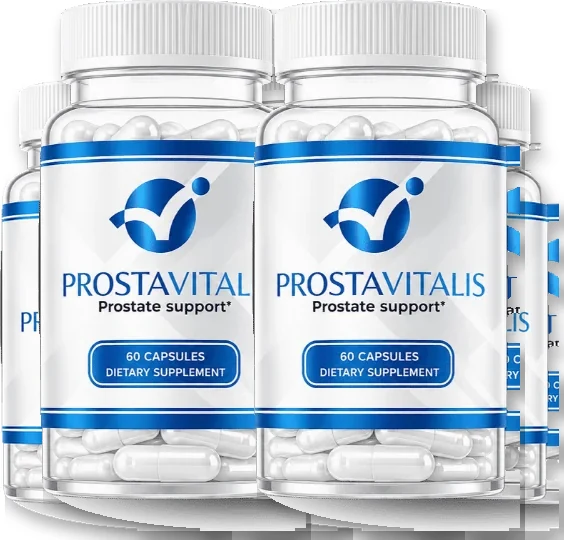
See how ProstaVitalis uses these ingredients
Pumpkin-seed-derived sterols alongside saw palmetto, beta-sitosterol, zinc and selenium in one daily formula — with every ingredient and its evidence set out plainly.
Order Now